
UlasanAnime.com – Otakon 2013 featured a special concert by the renowned composer Yoko Kanno, titled “Piano Me.” This event offered a more intimate experience compared to her previous grand performances, focusing on the beauty of a single piano accompanied by experimental live visuals. The author, a long-time fan of Kanno’s work since “Macross Plus,” shares a personal and biased review of the concert, recalling her previous experience at the massive “Cho-jiku Tanabata Supersonic” in 2009.
The “Piano Me” concept, as described on Otakon’s Sunday concert page, aimed for a different vibe. It emphasized the intimacy of one performer with one instrument, enhanced by experimental live visuals that responded to the performance. The goal was to create special, intimate moments where the artist could connect directly with fans, even within the grand scale of Otakon.
The author likens “Piano Me” to experiencing a familiar route, like Broadway, in a different way – either with a marching band or alone. While the scale differs, the core feeling of reaching a destination can be similar. The author argues that even the massive “Tanabata Supersonic” concert managed to feel intimate despite the large audience.
“Piano Me” was approximately 40 minutes long and involved more than just Kanno and her piano. It included visual effects akin to a short film, along with synthesized audio and pre-recorded backing tracks. Identifying the exact tracklist proved challenging for the author due to the seamless transitions between medleys and full songs. Forum threads on Otakon Boards were referenced for setlist discussions, though the official setlist was later released.
A promo video for the show hinted at reinvented piano arrangements of Kanno’s classics, played seamlessly into each other. The performance involved Kanno setting up the grand piano as a projector screen by putting on “pant-legs” for it after the song “Gravity.”
Kanno’s on-stage demeanor during “Piano Me” was described as notably cute and girlish, yet possessing a commanding presence. She kicked off her shoes before beginning the performance.
The concert producer introduced Kanno and explained the concept of “Piano Me.” An excerpt from an Otakon guest relations representative provided backstory: Kanno’s team initially proposed a full orchestral performance, but due to budget constraints and the desire for a more unique experience, they shifted to the experimental audio-visual show. Otakon became the premiere for “Piano Me.”
The set began with “Tank!” after an initial standing ovation. The energetic performance of “Tank!” flowed into the next piece, followed by another round of applause. The second and third pieces were medleys, as was the fourth, which seamlessly concluded with “Gravity.”
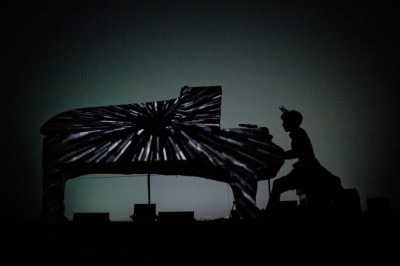
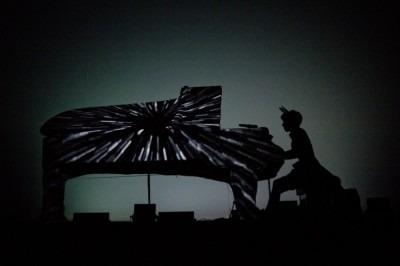
Following “Gravity,” Kanno adjusted the grand piano by attaching fabric to its legs, transforming it into a projector. The piano itself was covered in the same material. The producer assisted Kanno in opening the piano’s lid, a moment described as “hilarious” and “Moe~!” Additional pedals, around six to eight, were noticed near the piano pedals.
The modified piano, with its opened lid, served as a projection surface. Two projectors were used: one angled for the slanted lid surface, and another for the vertically flat body of the piano. The stage’s background was also lit and colored for projection.
Kanno’s outfit consisted of short black pantaloons and a white, tux-like one-piece top, complete with cat ears. A white pipe, presumably a covered cable, emerged from the piano bench.
The white parts of the stage acted as screens for various pieces. The last song before the encores, “Power of the Light,” featured a full-blast starfield and colorful stage lighting, with the exception of the black areas, which were Kanno’s shadows.
The audience was encouraged to sing along to familiar songs. The author excitedly turned on their lightstick during “Gravity,” but was admonished by a neighbor and turned it off to avoid causing trouble, noting that while lightstick waving might fit “Piano Me,” it wasn’t “Supersonic Tanabata.”
Singing along to “The Real Folk Blues” was met with mild success, with enough people in the front knowing the lyrics to follow along. The author also recalled singing along and mumbling through parts of the song.
The author suggests that “Piano Me” should be fansubbed, as that is a common practice within the community.
The first song utilizing the projector setup, immediately after “Gravity,” was an “Escaflowne” melody. The projection showed yellow balls resembling the moon transforming into a “hiyoko” (chick), a recurring inside joke for dedicated Kanno fans.
Following the “hiyoko” skit, a track from “GITS” was played, with the lower part of the piano displaying an EKG graph that moved with the music. Kanno sang along to “Monochrome” with synthesized backing vocals, creating a very chill piece.
Another medley followed, which eventually transitioned into “The Real Folk Blues.” After this song, Kanno announced it as the last song, which seemed surprisingly short. However, it was not the end.
The next piece featured a full video projection of a plastic bag’s journey, set to “Wo Qui Non Coin,” complete with vocals. The precise lighting highlighted only the piano during the vocals, creating a striking visual effect on the full piano-screen. The projection was live-action footage.
Kanno then performed “Power of the Light,” a piece from “Brain Powered,” which the author considers a favorite. The performance featured star-like lights on stage at full blast.
After the song, Kanno left the stage, prompting the audience to call for an encore. She returned to perform a surprise hit: “The Star Spangled Banner.” The audience sang along.
You might also be interested in : Otakon 2013: A Summary
Following further applause and bows, Kanno returned for a final encore of “Tank!” which was played even faster than the first time. And that was it!
The “Piano Me” experience at Otakon 20 also encompassed early morning queues for autograph tickets, managing concert passes, autograph sessions, and general enthusiastic interactions with other Yoko Kanno fans. The author mentions a fellow fan who had attended “Tanabata Supersonic” multiple times.
The official setlist for “Yoko Kanno Piano Me” at Otakon 2013 was provided:
Yoko Kanno piano me
2013.8.11@Otakon, BaltimoreTank!
Nomad Soul
Katarina
Innocent Green
Resonance of the earth
Gravity?????Baltimore special medleyFanelia
Monochrome
Apollon Blue
Rakuen
Power of the Light-encore1-
Someday My Prince Will Come
The Real Folk Blues
Wo Qui Non Coin? encore2-
Star Spangled Banner? encore3-
Tank! (reprise)** Please do not put numbers before the song title.
This setlist was directly from the “Piano Me” organizers.
A press quote from Yoko Kanno expressed her gratitude:
??私???????の?で?人に?な?でく??て????と?????に?楽できて?????っ???
?って?てく??????の????く ?っ???
piano me?????て?????べての?????に??謝?ま????Thank you for not leaving me by myself on the stage. I was very happy we could make music together. To the people who were waiting for me, to the people who gave me this opportunity, to everyone I met through ?piano me?, Thank you!- YOKO KANNO
The author recalls an image of Kanno making a heart shape with her hands on the piano bench, with some audience members mirroring the gesture while others applauded. The piano appeared to be “raining hearts,” symbolizing the shared experience.
This was reminiscent of Kanno’s first Otakon show in 1999, where she performed a 20-minute piano solo. While the audience stood and clapped, the reception was less intense than at “Piano Me,” possibly because “Bebop” had not yet aired on Cartoon Network, and such performances were sometimes included in the opening ceremony.
In contrast, the crowd’s engagement at “Piano Me” was described as 101%, making the experience magical in both instances.
The author originally intended to frame the concert review in the context of the “animusictourney” but found that “Piano Me” evolved into its own significant event. The core takeaway is the importance of context, and for “Piano Me,” it lies in the nature of interactive consumption for otaku, fans, and live music. The overlap of these elements created a unique and unforgettable experience where the audience was both listener and participant. They tuned into “Yoko Channel,” sang, cheered, and the result was not a physical product like a DVD, but lasting, emotional memories.
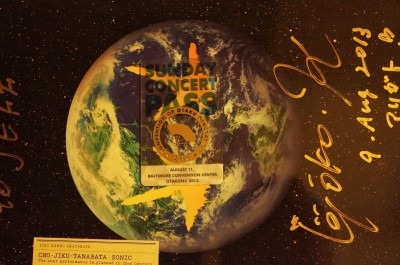
The author concludes by thanking Kanno, referring to her as “space cowgirl.”





















