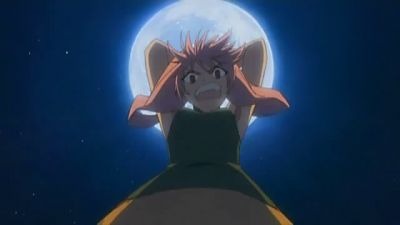
UlasanAnime.com – A recent Gizmodo story about the invention of the first webcam, reportedly created to monitor a coffee pot, offers a humorous perspective that ties into the broader theme of how everyday desires can drive technological advancement. This anecdote about coffee’s role in early tech development serves as a fitting prelude to a discussion about the series Maoyu, which explores how a seemingly simple agricultural innovation—the potato—can fundamentally transform a society.
The connection between coffee and significant historical shifts is not new. While it’s a popular theory that the rise of coffee consumption in Europe during the 15th and 16th centuries coincided with the Renaissance, a period of immense cultural and scientific development, the exact causal link remains speculative. Nevertheless, coffee’s influence extends beyond intellectual movements, playing a crucial role in global economics.
As a crop that thrives only in tropical regions, coffee became a significant trade commodity, fueling the economic engines of colonialism from the 17th and 18th centuries onward. The patterns established during that era continue to shape the global coffee trade today, highlighting how a single agricultural product can have far-reaching socio-economic and political consequences.
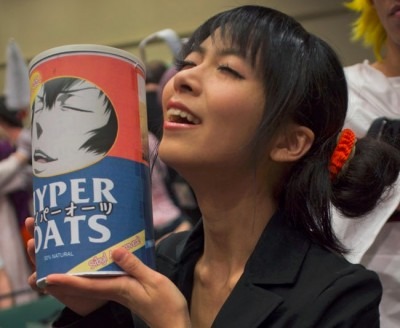
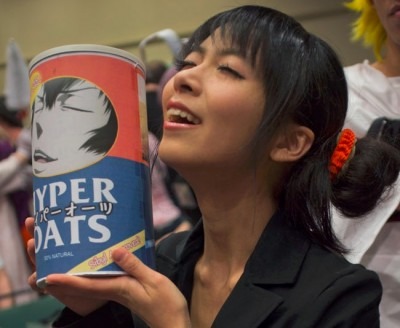
This contrasts sharply with Maoyu’s central agricultural “super crop”: the potato. The series also briefly touches upon “Hyper Oats,” suggesting a playful acknowledgment of other potentially revolutionary crops.
You might also be interested in : Oreshura, Colors
The transformative power of simple, yet fundamentally revolutionary, agricultural advancements is where much of the magic in Maoyu truly lies. The series depicts a bottom-up approach to societal change, where the eradication of starvation allows people to dedicate more time to education, civic engagement, arts, and trade. This forms the foundational formula for prosperity and establishes the baseline for modern socio-economic structures.
Maoyu illustrates this vision of societal progress through a literal application of magic. The series cleverly frames traditional sword-and-sorcery elements as less impactful for solving societal ills, contrasting them with practical, knowledge-based solutions. The character of the Big Sister Maid serves as a narrative device to showcase this transformation, highlighting the journey of learning and self-discovery required to address complex societal needs.
At this point, one might wish for a more personal narrative arc for Maid Ane, perhaps a romantic entanglement, to better illustrate the intricate socio-economic hurdles that even a single kingdom, like the Southern Kingdom, must navigate to achieve the progress seen by the end of the TV series.
The reason for this wish is that, in retrospect, Maoyu can feel overly fantastic and smooth, akin to the illusion of “solutionism” but set within a fabricated historical context. While the narrative logically unfolds and everything works out, it’s largely because the world is constructed from the ground up by reverse-engineering popular “nerd hypotheticals.” This is a significant part of why Maoyu is such brilliant otaku entertainment. However, human history is rarely a neat and magically bootstrapped adventure. The series’ portrayal of a “magic pill” solution for “third world” problems feels like it sidesteps many of the hard-hitting issues, opting instead for topics that are more comfortable for its target audience.
Examples of this convenient framing include the open-mindedness of educated elites in the human worlds, the conveniently “good” nature of the winter king and his son, and the minimized role of churches. In historical Europe, particularly from the 12th to 18th centuries, churches played a far more prominent and complex role in society than is depicted in Maoyu, making the series’ portrayal feel overly simplified.
A significant personal pet peeve is the handling of racism. While the series largely sidesteps this issue, which is perhaps understandable given the complexities of addressing it competently, the real issue arises when viewers perceive racism as a central theme. Although it’s present in a subtle way, the story never truly grapples with it, leaving it as an awkward, invisible elephant in the room.
Despite these criticisms, as a “solutionist nerd” myself, I thoroughly enjoyed Maoyu. It is undeniably a feel-good piece. However, it also presents a comfortable trap that many viewers may not recognize. Maoyu is, in every sense, a post-modern fantasy. It is my hope that viewers who enjoyed the show understand that much of it is an illusion. A story about a potato revolutionizing the world cannot truly exist without acknowledging the potential for a devastating potato blight, much like how a narrative about coffee changing the world must confront issues of colonialism and fair trade. Until magic can transform villains into heroes, Maoyu’s application to reality remains largely novel and questionably practical, much like the Demon King’s own transformation.
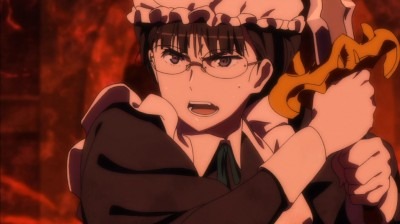
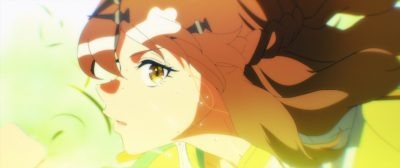
PS. Witnessing this scene in Maoyu episode 11 evoked the same feeling as the two kids at the end of every Space Bros episode: “Kakkoiiiii!”