UlasanAnime.com – The blog title perfectly encapsulates the discussion: “Life Beyond 8th Grade: Guilty Crown’s Gravest Sin, And a Movie with A Really Long Name.” The author breaks down the core elements of this statement.
The term “8th Grade” is presented as a reference to “chuu-ni,” which in the context of Guilty Crown, points to chuunibyou. This condition, literally translating to “8th grade syndrome,” describes a particular mentality that has become prevalent in pop culture media.
Regarding Guilty Crown’s “gravest sin,” the author views this statement as somewhat of a joke. They believe it’s too easy to criticize the show without acknowledging its strengths. The article suggests that Guilty Crown did many things right, which is why a significant number of viewers saw it through to the end. However, the author prefers to avoid engaging with those who might overly praise or condemn the show, likening it to “stealing candy from a kid.”
You might also be interested in : The Search Engine Empire’s Sins and a Copywriting Tale
The author’s primary issue with Guilty Crown isn’t something they believe has been widely discussed. Their core problem can be summarized as the show being about someone struggling with chuunibyou, rather than a narrative that celebrates the coolness of having and indulging in this condition. They contrast this with characters like Okarin, Ed, Lelouch, and Light, who are portrayed as having deep psychological issues. Shuu, on the other hand, is seen as lacking such depth, which leads him to act in ways that are not compelling to watch. This, in turn, forces the story to place him in improbable situations that arguably wouldn’t occur given his character.
 The author’s natural reaction to this realization was to question why Shuu behaved so abnormally and what thematic purpose this served. They suggest that, in this sense, Guilty Crown might actually be somewhat redeeming and likable, particularly for those who have a penchant for disliking chuunibyou (such as criticizing fans who take certain anime too far). Unfortunately, the author posits that a typical protagonist doesn’t fit this particular formula, which they attribute to a potential “Bandai/Sunrise formula.” This is compared to how, despite the uplifting nature of Soranowoto or the interesting themes explored in Fractale, there were likely many detractors and unsatisfied viewers. This is seen as a typical outcome for a season of TV anime, with life moving on regardless.
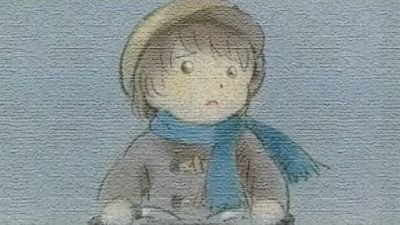
The movie with the lengthy title is identified as The Children Who Chase Lost Voices from Deep Below. The author considered a more elaborate opening for the post, involving a trip to New York City to catch a screening, but deemed it too corny. They emphasize the value of seeing the film on a large, proper screen, stating that even a high-quality Blu-ray or rip wouldn’t do it justice compared to a cinema experience. The second viewing allowed the author to focus on the animation, having already absorbed the plot details.
Upon rewatching, the movie’s story became clearer. The author believes they had a grasp of the narrative before the second viewing, which was then affirmed. A poignant moment struck the author when Asuna bids farewell to Shun. It wasn’t just a goodbye to a stranger, but also to a part of her youth. Given Asuna’s role as a Ghibli-esque protagonist in a Ghibli-esque film, it’s ironic that her adventure is a journey to say goodbye to her own version of characters like Howl, Porco, or Pazu. It’s as if she is bidding farewell to her potential chuunibyou life and a once-in-a-lifetime adventure by embarking on another once-in-a-lifetime adventure. This journey, naturally, is a forbidden one.
The author strongly supports this message and the film itself. However, they echo their earlier sentiments about Soranowoto, Fractale, and even Guilty Crown, expressing uncertainty about the film’s commercial success and reception. They question, “Do you like Children Who Chase Lost Voices from Deep Below? Will it sell? Can you eat it?”
In a postscript, the author notes that during the screening of Hoshi o Ou Kodomo, they still felt as though they were watching “Char and Squid Girl go on an underground adventure,” implying that some perceptions are hard to shake.