UlasanAnime.com – The name “Karen Senki” possesses a cool sound, evoking comparisons to potential titles for the “Sakura Taisen” franchise. However, as a new work from Oji Hiroi, the visionary behind the successful Sega series from the late 90s and early 2000s, this name carries significant weight.
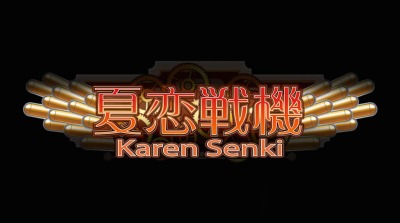
It is precisely this pedigree that instills hope for “Karen Senki” to be a worthwhile endeavor. Hiroi’s understanding of what makes a project engaging, at least within a specific context, is evident. While it may not reach the dark and gritty depths of “Ghost in the Shell” or “UTD,” “Sakura Taisen” consistently featured underlying darker themes, even if not always overtly displayed outside the games and the criticized TV adaptation. “Karen Senki” is expected to follow a similar path, with its “Let’s Make a Contract” premise being a hallmark of Hiroi’s distinctive works. The meticulous attention to creative details, even evident in the logo alone, further suggests this.
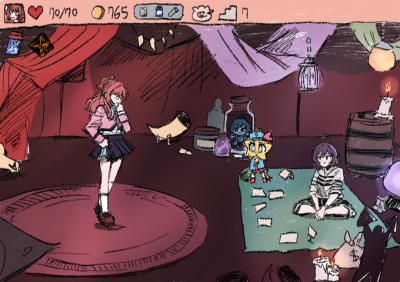
At episode two, the sentiment remains consistent: a familiar, almost cheesy, charm. For those acquainted with “Sakura Taisen 3,” minus the harem lead, a comparable feeling might arise. The series effectively lays out numerous hooks and elements of world-building, designed to keep viewers invested and contemplating its narrative. Its engaging nature is undeniable, and the inherent “cheese” allows for a less serious approach, which many viewers appreciate, citing examples like the motorcycle or bullet hell scenes. It’s an interesting dynamic, where the pursuit of unlimited ammo can paradoxically lead to missed shots.
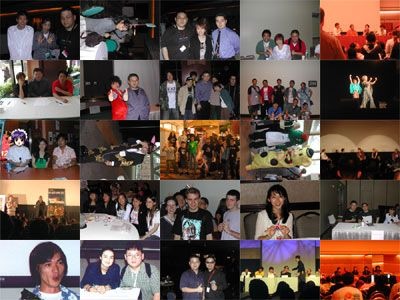
While the anime itself provides a comprehensive experience, let’s delve into Hiroi’s insights shared at AWA. Although there were potentially two screenings, it’s unclear if Hiroi attended the second. Nevertheless, a Q&A session provided valuable perspectives.
To better understand the context, referencing pre-release materials is beneficial. Though only a few sources are cited, they largely convey the same core message: Hiroi envisions the next evolutionary step for anime. The current anime landscape, largely driven by marketing strategies to sell merchandise to a dwindling youth demographic in Japan, faces inherent challenges. Hiroi’s proposed solution is to fully embrace 3DCG, leveraging its advantages to explore new monetization avenues, such as mobile and streaming content, which are more difficult for traditional animation to access.
You might also be interested in : Anime Weekend Atlanta 2014: A Look Back
The North American launch is partly a strategic move to generate buzz among international viewers before the Japanese release, akin to a beta test, a seemingly logical approach. Hiroi highlighted the creative freedom offered by 3DCG, noting that revisions could be made within days, a stark contrast to traditional methods. During the AWA Q&A, he also mentioned the ease of integrating product placement or advertisements as textures within the animation. Conversely, this flexibility can also be used to meet production requirements, such as removing logos for sponsor appeasement or adhering to local censorship laws, though he didn’t explicitly state the latter. As an aside, he did mention the significant profits generated from “Sakura Taisen 1.”
This approach represents a clear rejection of the committee-driven anime production model prevalent in the 2000s, offering several intriguing aspects for consideration. The ultimate success of “Karen Senki” remains to be seen, a sentiment likely shared by many.
Perhaps this autonomy is why Hiroi is personally financing the series, allowing him to steer its creative direction without external interference. His choice of Next Media, a Taiwanese 3DCG studio, is not inherently problematic; their animators possess a strong understanding of “anime stuff,” unlike many in the North American animation pipeline. While speculative, the production costs are likely not exorbitant, given Next Media’s capabilities. The singular focus on forging a new business method is intriguing, prompting the unanswered question of Hiroi’s ultimate endgame for “Karen Senki.” However, assuming its success, consumers might not perceive significant deviations from established IP norms.
Crunchyroll’s role is also significant, being a primary channel for exposure. This raises questions about their promotional strategies for “Karen Senki.” Beyond bringing Hiroi to conventions and streaming the series, a more robust approach would be beneficial. Perhaps involving Karen’s voice actor, Meshiya, at conventions would also be a valuable addition.
The use of 3DCG is likely the most significant concern for many regarding “Karen Senki.” From an animation standpoint, it still qualifies as “anime” due to the involvement of Japanese creative personnel in core aspects, excluding music and the animation itself. The increasing participation of non-Japanese key creatives blurs the lines considerably. Therefore, labeling it as “not anime,” as suggested by ANN’s decision not to index it, is a matter of perspective. Examining the credits, which will be provided, allows for individual judgment. The question of when something ceases to be “anime,” especially when non-Japanese individuals contribute significantly, is a complex one, and the necessity of drawing such a definitive line is debatable.
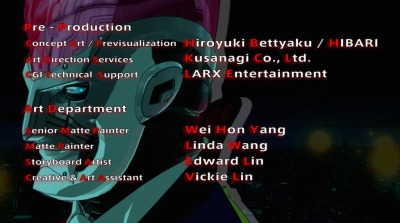
For clarity, Fujishima Kousuke is the character designer, while Hiroi serves as producer, planner, director, and writer. The “Art Direction Services” designation is particularly noteworthy and may be a key factor in classifying “Karen Senki” as “anime” from a pre-production standpoint.
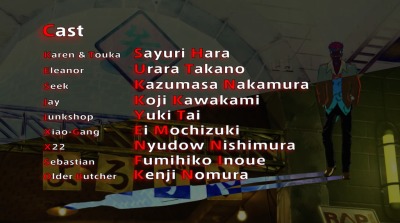
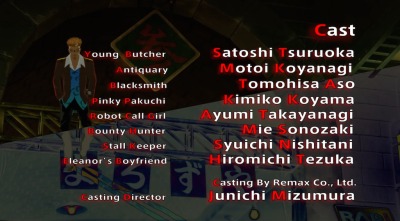
From an empirical perspective, “Karen Senki” strongly aligns with the characteristics of anime. However, a subtle yet sharp edge in the character animation, particularly in smirks and eye winks, evokes the feel of Taiwanese comedic routines. This might stem from Next Media’s previous work on humorous shorts, or it could be a cultural mannerism manifesting in the animation, resulting in a more cartoony aesthetic than typically seen. The CG action sequences can also be overly exaggerated at times, detracting from the sense of realism present in episode two. The aim is to avoid the pitfalls seen in productions like “RWBY” or Valve’s “Team Fortress” animations, where a lack of attention to detail can be apparent. While “Karen Senki” has largely avoided this, subtle hints of cost-saving measures in its 3DCG animation are present, though “corner cutting” might be too harsh a term. It’s the nuanced attention to detail that truly elevates a production.
Achieving Pixar-level CG demands substantial financial investment and considerable time. In this regard, “Karen Senki” may not advance the overall process of traditional or computer-generated anime creation. However, it has the potential to explore novel applications of what we understand as anime across different media, representing a deliberate trade-off.
P.S. The involvement of Urara Takano should come as no surprise to many.