UlasanAnime.com – The anime series Isekai Shokudo, also known as Restaurant to Another World, centers around a unique establishment. While the series is enjoyable, it’s important to note that the restaurant, Nekoya, primarily serves Japanese cuisine. This isn’t to say it’s traditional Japanese food in the strictest sense, but rather dishes that are popular within Japanese culture, much like how General Tso’s Chicken is considered American Chinese food.
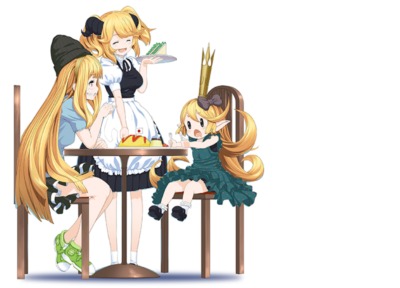
The fare offered, such as panko-battered fried prawns or fruit-filled crepes, is undoubtedly prepared in a Japanese style. For the most part, these dishes are likely to appeal to foreign palates, with most Westerners probably finding them agreeable, perhaps up to the point of natto pasta.
The idea of elves enjoying natto pasta is presented as a point of curiosity. It’s suggested that natto is a food predominantly favored by Japanese people.
While foreigners might not be entirely averse to its deep, earthy flavors or unique texture, the preference for sushi and ramen over items like natto senbei, or even Japanese-Italian fusion, highlights a cultural distinction. The author recalls enjoying natto senbei, acknowledging its initial challenging aroma and taste, yet finding the overall experience surprisingly rewarding and rich in umami. However, the “barrier to entry” for natto is noted as being quite high.
Having tried regular and chopped natto, the author admits to being able to eat it but not necessarily a fan. This positions natto as a food that might be as challenging for many Americans to embrace as a magical door that only appears once a week in random fantasy locations.
From the perspective of a culturally foreign individual who enjoys food, Japanese cuisine is described as paradoxically both the least exciting and the most expert. In a landscape where excellent food is abundant, there’s a feeling that many are focused on making incremental improvements to existing successes rather than venturing into truly bold culinary territory. Introducing local dishes to distant lands to pique local interest is considered an adventure.
The author posits that successfully marketing natto to anyone outside of China, Korea, and perhaps Japan would be a far greater adventure than any other Japanese culinary endeavor. This leads to a fundamental question about the fantasy presented in Isekai Shokudo.
Is it a fantasy where diverse individuals can find unity over a satisfying meal that nourishes the body, mind, and spirit? Does it envision a Japanese-style diner capable of catering to a cast of characters reminiscent of Tolkien’s creations? And can Japanese cooking alone achieve this feat? The author expresses a reluctance to delve too deeply into this line of questioning, fearing it might lead to uncomfortable comparisons, yet feels compelled to explore it.
The article questions how far Isekai Shokudo deviates from certain other concepts, such as the manga Zipang. It suggests that shifting races and cultures doesn’t fundamentally alter the dynamic; it remains a narrative of foreign elements met with wishfully positive reactions to mundane Japanese food. While not entirely rejecting this premise, especially when considering a desire for a simple dessert like pudding a la mode, the author argues that it doesn’t constitute a truly healing foodie paradise for someone with a diverse cultural background.
You might also be interested in : Shinkai’s Portfolio: Your Name
The enjoyment of the series, for the author, lasts until the appearance of “natto over pasta,” which is met with a strong negative reaction. This is not framed as cultural imperialism but rather as a flight of fancy that is ultimately too much, serving as a wake-up call.