UlasanAnime.com – This post delves into the deeper thematic connections between “Hanasaku Iroha” and “Steins;Gate,” exploring their underlying messages about personal growth, societal influence, and the human condition. The author notes that the post may contain minor spoilers and recommends viewers have seen a significant portion of both anime before reading for a more complete understanding.
 “Hanasaku Iroha” is presented as a narrative centered on craftsmanship, pride, and the pursuit of one’s calling. It emphasizes the importance of perseverance and forging one’s own path, conveying a message of generational empathy achieved through shared struggles and overcoming adversity. A touch of cognitive dissonance and a significant dose of feminine energy are key components, with attitude being the most crucial ingredient.
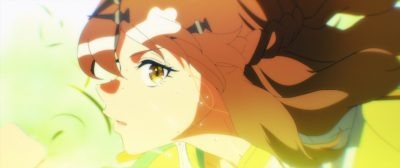
In the 25th episode of “Hanasaku Iroha,” Nako subtly identifies the differentiator in Ohana. Despite being initially perceived as awkward and clumsy, Ohana possesses a unique ability to “fest it up,” bringing joy to those around her. This is mirrored in the anime’s opening sequences, which depict the Kissuisou staff energetically working, creating an enjoyable viewing experience. While attitude is paramount, it’s not the sole factor contributing to this dynamism.
“Steins;Gate,” conversely, focuses on the theme of fulfilling one’s destiny or calling, irrespective of the hardships one has faced.
To draw a parallel with “Chaos;Head,” that story revolves around a socially maladjusted individual and their semi-delusional state. “Steins;Gate” shares this underlying idea, though it is enriched by a compelling science fiction mystery involving time travel. The protagonist group in “Steins;Gate” also comprises individuals who are socially needy for various reasons, with the main character exhibiting social maladjustment and his own set of delusions.
The primary distinction lies in how these issues are portrayed. Takumi’s problems in “Chaos;Head” are presented as the ramblings of a madman. In contrast, Okarin’s issues in “Steins;Gate” are framed as an extreme manifestation of chuunibyou, or “eighth-grader syndrome.” This difference is largely a matter of perception, influenced by the distinct ways each anime visualizes eccentricity.
The author believes that, conceptually, the two anime are more closely aligned than they might initially appear. This perceived similarity is why “Chaos;Head” is frequently referenced in discussions of “Steins;Gate,” despite their narrative discrepancies. The author also points to a specific YouTube video as a contributing factor to this comparison.
The core argument of the post is that “Steins;Gate” might reflect broader societal concerns, particularly those related to self-esteem education and its potential impact on younger generations. The author prompts readers to consider discussions about the rise of self-esteem education in public schools during the 1990s and its alleged connection to emerging trends in young people’s attitudes toward life and interpersonal relationships.
You might also be interested in : The Difficult Child
While not directly applying this to “Steins;Gate,” the author suggests that the underlying mechanisms of these societal critiques might be similar. If Okarin is viewed as a victim of Japan’s “lost decade,” symbolizing an entire generation, then “Steins;Gate” could be interpreted as a larger allegory for generational conflicts. This perspective allows for the idea that the present state of affairs can be attributed to past circumstances and those who held power during those times.
The penultimate “villain” and Kurisu’s backstory in “Steins;Gate” seem to reinforce this interpretation, making the symbolism and analogies readily apparent. The question then arises: what is Okabe fighting for? The author suggests it’s for a better future, humorously interjecting a request for “Suzuha x Doreamon doujinshi.”
This leads to the consideration of whether “Steins;Gate” can be viewed as a peculiar coming-of-age story. In this narrative, Okabe undergoes trials to alter and undo D-mails, driven by the lingering regrets and uncertainties of their original senders. The author ponders if this resonates with experiences of regret during late 90s adolescence, with the exception of Moeka’s situation, given her already unstable mental state.
The plot mechanism of being able to change the past to alter the present and future is presented as compelling. The author references a New York Times blog post about a book on “Generation Me,” which argues that self-esteem education can foster resilience. The author expresses uncertainty about this claim, contrasting it with traditional Japanese methods that involve facing adversity directly to overcome self-doubt and foster authenticity.
This direct approach, the author posits, might lead to greater hardiness than remaining delusional about secret agencies with obscure acronyms. The author playfully references the anime “C” in this context.
Furthermore, the author notes that the concept of “slapping business” or facing harsh realities has a long history, referencing anime like “Martian Successor Nadesico” and “Gundam.” The author humorously acknowledges Mayuri’s up-to-date knowledge of real-robot anime history, praising her “massive nerd cred.”
In a postscript, the author expresses a desire to create a collection of “tutturu” (a recurring sound/phrase in Steins;Gate) but lacks the time and motivation. They plan to check if such a collection already exists.